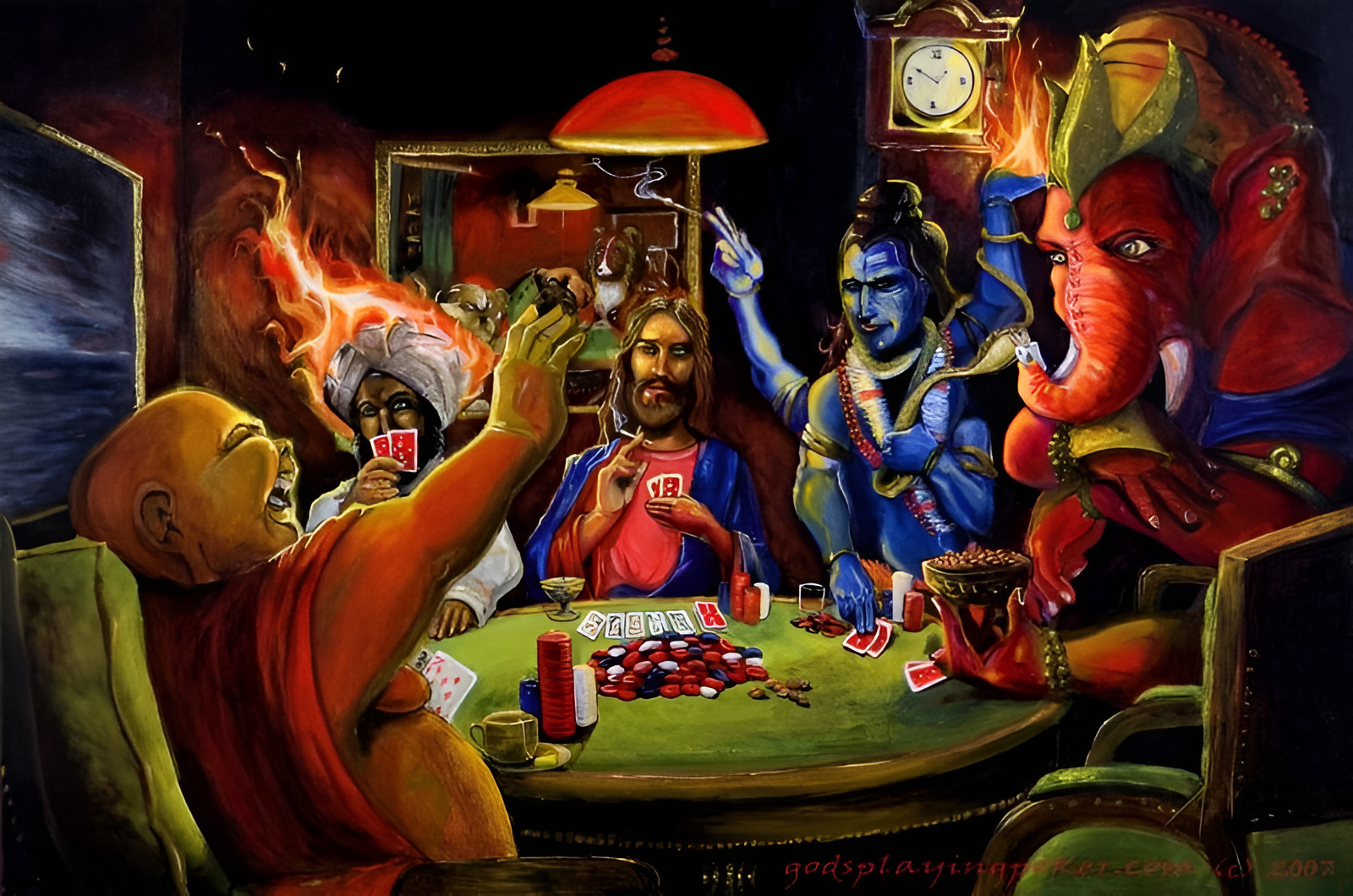
i don't think about it. that's the first honest thing i can say. the hand moves before anything else does, before whatever part of the brain that weighs and considers and decides has had the chance to weigh anything. there's something in my chest that responds to need the way a nerve responds to pressure, not with thought, just with sensation, and the giving is how i make the sensation stop. i understood early that this makes it partly selfish. i'm not giving to be good. i'm giving because seeing a person in that position does something specific and unpleasant to me and the fastest way to move through it is to give them whatever i have on me and keep walking. i don't follow it further than that and i don't wonder what it becomes on the other end.
what i notice is how little it costs me in comparison to what most people treat it as. a coin is an inconvenience to me and a different thing entirely to someone else, and the distance between those two facts is something a lot of people seem genuinely comfortable ignoring. i've watched people register the need in front of them, calculate the inconvenience of reaching into a bag, and decide the calculation doesn't favor them. i've watched people quicken their pace. it is not because they don't have it, it is because giving would mean stopping, would mean being seen stopping, would mean possibly attracting the same need again tomorrow in the same place. perhaps the economy of it makes sense to them. it has never made sense to me.
i don't think this makes me better. i think i am just positioned differently inside my own discomfort, and discomfort is the real currency of giving more than money is. most people give when it costs them nothing. some people give when it costs them something. very few give while knowing it might not even matter in the long run and doing it anyway because the alternative is walking past.
the more difficult thing is where this came from. because i did not arrive at it on my own. i watched it first.
my father is not a good person. i want to say that plainly because softening it would misrepresent what i'm about to say. he is possibly the worst thing that has happened to my life, and i hold that without drama because it has had long enough to become just a fact. but i watched him give. not always in ways that were useful or clean or uncomplicated, but the impulse was there and it was real, and i recognized it the way you recognize a feature you share with someone you didn't want to share anything with. that recognition is its own specific discomfort.
what i don't know what to do with is what it means that the generosity and the damage came from the same person, out of the same character, without apparent contradiction. because they did not cancel each other. the people he gave to were fed or helped or whatever it was, and the people he harmed were harmed, and these things existed simultaneously in the same life without resolving into anything coherent.
i inherited one and not the other, or that is what i tell myself, and i think it is mostly true. but i have started to wonder whether the inheritance is as clean as i assumed. because the impulse i carry, the nerve that fires before thought arrives, that came from watching him. it formed inside an atmosphere he created. when i reach into my pocket i am doing something he did, with hands that learned it from his hands, and i cannot fully separate the gesture from its origin the way i might like to. i don't think this ruins it. but it is there, underneath the giving, the way some things do, and i have spent longer than i want to admit pretending it doesn't.
the question to reach for next is whether the giving redeems him. the logic goes that enough good acts accumulate into something that offsets the damage, that there is a ledger somewhere with two columns and what matters is which one is heavier at the end. i don't believe this but i understand the appeal of it, which is that it makes a person's life legible, makes it possible to arrive at a verdict, and there is enormous comfort in verdicts.
but the people he gave to did not receive less because of what he was. the help was real. and the harm was also real and landed the same way. they happened in different bodies, which means there is no place where they meet and cancel. the ledger does not exist because the people in it never shared a single accounting. you cannot subtract one person's hunger being fed from another person's wound. they are not the same currency.
what i think about is whether the gift itself is contaminated by who gave it. whether the person who was helped carries something of what he was without knowing it. i don't think this is true but i think about it. the gift moved through his hands and his hands were not clean, and at some point it became a meal or a moment of relief and it stopped being connected to him at all. the origin dissolved. that is maybe the only genuinely clean thing about giving, that it detaches from the giver once it lands.
which brings me to this less comfortable question: whether my own version of this is clean in the way i have been telling myself it is. because there is another shape this thing can take and i have seen it take that shape in myself without fully naming it.
the sensation i described at the beginning, the nerve responding to pressure, it does not stop working after you give once. it resets. tomorrow there is another person and the sensation is back and the hand moves again before anything has been weighed. and at some point you have to ask whether what you are doing is giving or whether you are managing a feeling, whether the person in front of you is someone you are helping or a mechanism through which you are relieving yourself of something you cannot tolerate carrying.
i have given when i had very little. i have given past the point where it was comfortable and then past the point where it was responsible and told myself that the discomfort was the point, that ease was a bad measure of rightness, that the alternative was walking past. i still believe some version of this. but i also know that i have used it. that i have used the person in front of me to make the feeling stop, and dressed it as virtue, and then felt something embarrassingly close to relief for the rest of the day. that relief should complicate things more than i have let it.
most traditions have already noticed this problem and tried to solve it, and none of them have fully succeeded.
christianity seems the most aware of the ego inside the gift and somehow still the least able to contain it. the instruction in matthew is almost violent in how precise it is: do not let your left hand know what your right hand is doing. give in secret, give so completely that even your own self-image is not present to take credit. what that understands is that the feeling of having given is already a form of payment. the relief i described, that embarrassing warmth, the theology sees it clearly and names it as the thing to guard against. the widow with the two coins is praised not for the amount but for the proportion, which is another way of saying that giving from surplus is not really giving, it is just redistribution with a good feeling attached.
and then you have the named hospital wings. the charity galas. the endowment plaques. at some point the instruction and the institution stopped talking to each other. what was meant to excise the ego from the act became one of the more reliable ways to build a public one. i don't think that is unique to christianity. that is what happens when you try to legislate an interior experience into institutional practice. the ego finds the gap between the two and settles there.
what islam does structurally is harder for me to argue with. zakat removes the question of generosity from the conversation entirely. it is a pillar, not a virtue, which means it is simply something you do, not because you are good but because it is required. and the reason it is required is the underlying premise: that wealth is amanah, a trust held temporarily, and the portion that belongs to those in need was never actually yours to begin with. you cannot be generous with something you don't own. but then there is niyyah, the question of intention, and in islam intention is not incidental, it is constitutive. the same act performed with hollow intention is spiritually worth nothing. so you have giving made obligatory to protect it from the ego, and then intention made essential in a way that reopens the interior. the ego finds the door. it always finds the door. i think what this describes is not a failure of the tradition but an accurate account of the problem, which does not have a clean solution and never has.
what i kept circling without being able to reach, until i found a name for it in the older texture of the hindu tradition, is this: the person who receives does the giver a service by accepting. receiving is itself a form of giving. i have turned this over for a long time because it is the most precise description i have found of what actually happens in the transaction. the person in front of me accepts what i hold out and in accepting it releases me from whatever was accumulating in my chest. they are doing something for me. the directional arrow i have been taking for granted is not as clean as i assumed.
this is not a comfortable thought. it means that what i have been calling generosity for years is perhaps only describing half the exchange. that the person i thought i was helping has also been helping me, and may have been doing more of the work than i recognized, absorbing not just the coin but the feeling i needed to discharge through it. i owe them a different kind of acknowledgment than the one i have been offering.
the structural argument exists and is largely correct. individual giving lets the people who have too much feel good about having too much without addressing that the having too much is the problem. the food bank is symptom management. by making people comfortable enough with their own generosity you extend the life of a system that requires the food bank to exist. i think this is true and i also think it has never moved me in the moment, standing in front of a person who is hungry right now, to tell them that the structural critique is more important than the meal. that argument happens at a level of abstraction that the immediate transaction cannot reach. two people are standing near each other. one of them has something the other needs. the question of whether the system that produced that gap is unjust is yes. the question of what you do right now, with what you have on you, is not answered by the yes.
i give anyway. i think most people who give regularly have made the same accommodation, which is that the structural argument is true and insufficient at the same time, and you can hold both of those things and still reach into your pocket.
what i can't hold as easily as i used to is the clean version of my own motives. i know where the impulse came from, and the origin doesn't ruin it exactly but it doesn't leave it alone either. i know the relief i feel after is a form of payment i collect from the transaction. i know the person in front of me is doing something for me by accepting what i offer. and i know that none of this means i should stop, only that the story i tell about it needs to be a more honest one.
the hand moves. that much i know is true. what moves it is harder to say than i used to think, and the harder version is probably the right one.