Charity Case
There is no single anecdote. What I'm talking about is a reflex.
I don't think about it. That's the first honest thing to say. My hand moves before my brain can weigh the distance, calculate the risk, decide to keep walking.
There is a knot in my chest. It responds to another person's scarcity the way a raw nerve responds to pressure. Not with a thought. With a sudden, sharp ache.
Reaching into my pocket is how I make the ache stop.
I understood early on that the gesture is selfish. I am not giving to be good. I am giving because a person on the pavement does something to my skin, and the fastest way through it is to drop what I have and keep moving. I don't look back. I try not to wonder what the money becomes on the other side.
The last time I caught myself doing it, I was outside a shop I pass every week. A woman sat on her heels, tucked into herself, frozen. I had change loose in my palm from a counter. I stopped. I dropped it into her hands. I kept walking. Four seconds, maybe. What lingered wasn't virtue. It was a strange lightness, the relief you feel after remembering to drink water. A valve, releasing. Nothing more. Knowing that hasn't stopped my hand from moving.
It costs me so little. A handful of coins is a minor inconvenience to me. To someone else, it is the day's boundary line.
I've watched people register a person on the street. Calculate the annoyance of unzipping a bag. Decide the math doesn't favor them. Quicken their pace. It isn't the money. It's that stopping means being seen. Means the same encounter tomorrow. Maybe that math makes sense to them.
I am not better than them. I am only positioned differently inside my own intolerance for discomfort.
Discomfort is the real currency here. Most people give when it costs them nothing. Some give when it costs them something. Very few give knowing it might not matter in the long run, and do it anyway, because the alternative, walking past, is unendurable.
I ask myself where the wiring came from. I know I didn't invent it. I watched it first.
My father is not a good man, if the word still means anything.
I watched him give. It wasn't always clean or useful. But the twitch was real. I recognized it the way you recognize a family trait in the mirror, the shape of a jaw, the tilt of a head you inherited from someone you wanted nothing to do with. That recognition is its own sickness.
The damage and the charity came from the same hands, without contradiction, without one ever canceling out the other. The people he helped were fed. The people he broke stayed broken. Both realities sat in the same house and refused to resolve.
There were strangers he saved while his own family was burning. That is a hideous memory. He gave a large sum to someone who needed it once, and for a second I felt a hot spike of pride before I caught myself. The shame of that pride has never fully left. He gave me the impulse to help and the humiliation of wanting to, in the same motion. He taught me how to reach out my hand, then made it impossible to feel clean doing it.
I tell myself I only inherited the giving, not the violence. I think that's mostly true. Lately I doubt how clean the break is. The impulse was formed in the weather he made. When my fingers find a coin, I am repeating a gesture I learned by watching his hands. I can't peel the action from its origin. It doesn't ruin the gift. But it's there: a watermark under the paper. Hold the gesture to the light and you can see his face.
The easy question is whether the giving redeems him. We love the logic of a ledger: the idea that if you accumulate enough decent acts, they will eventually outweigh the wreckage. It's a comforting fantasy, because it makes a messy life coherent. It offers a verdict.
But the hungry person he fed did not receive a lesser meal because of his sins. The help was real. The harm at home was just as real, landing at full weight on different bodies. Because the pain and the relief happened in different skin, they can never meet to balance the scale. You cannot subtract one person's hunger from another person's childhood wound. There is no shared account.
Sometimes I wonder if the money itself was contaminated by his touch. If a stranger carries a piece of his darkness without knowing it. I don't think that's how the world works. But the thought stays. The money moved through his hands, became a meal or a night under a roof, and cut ties with him completely. The origin dissolved. That might be the only clean thing about charity: once it lands, it forgets who threw it.
Which brings me to the harder truth. My version of this isn't clean either.
The valve in my chest doesn't break after it's used. It resets. Tomorrow there will be another person on the corner. The nerve will twitch. My hand will move before I can think. Eventually you have to look at your own hands and ask: am I helping the person in front of me, or am I using them as medication? Are they a human being, or a tool I use to scrape out a feeling I cannot carry?
I have given when I had nothing to spare. I have given past the point of comfort, past the point of responsibility, telling myself the bleeding edge was the whole point: that if it felt easy it didn't count. I still believe that, in a way. But I know I've used it as armor too. I have used a stranger's hunger to buy myself a day of embarrassing, self-righteous relief.
Every spiritual tradition has seen this trap and tried to build a wall around it. I spent years in libraries looking for language to describe what my father's hands were doing. Trying to understand what else they were capable of.
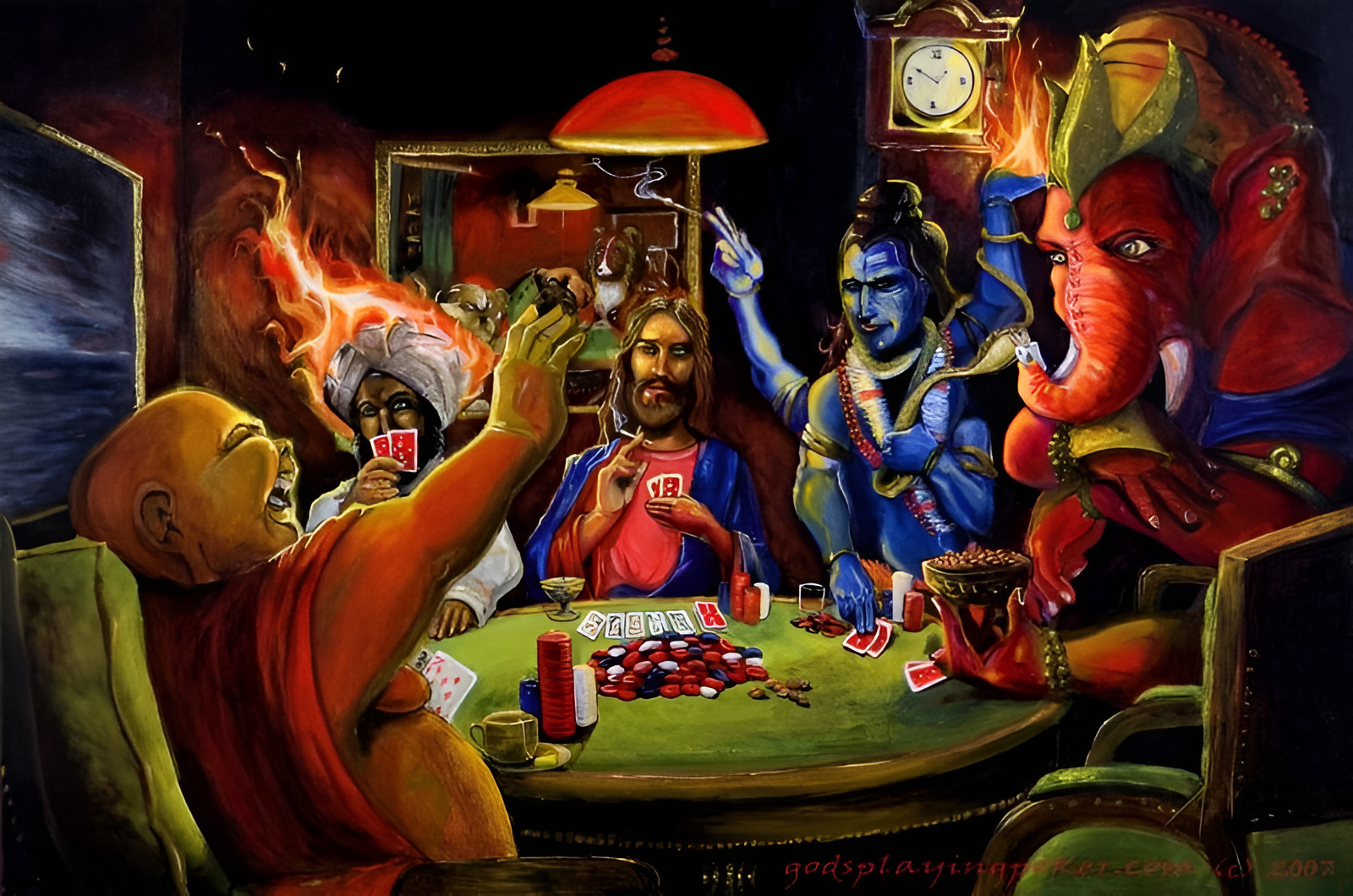
Christianity treats the ego like a threat. The instruction in Matthew is almost violent in its precision: do not let your left hand know what your right hand is doing. It demands a secrecy so total that even your own self-image isn't allowed in the room to take credit. It knows the warm glow of generosity is a form of self-payment. The widow with her two coins is praised because her giving hurt; giving from surplus is administrative redistribution with a hit of dopamine attached. And yet we still have the gold plaques on hospital wings, the charity galas. The ego always finds the crack in the theology and sets up camp.
Islam tries to bypass the ego entirely through structure. Zakat isn't a choice or a virtue; it's a pillar, an obligation on par with breathing or paying taxes. You don't get to feel like a savior for doing it, because the underlying premise is clear: your wealth was never entirely yours to begin with. It's amanah, a temporary trust. You cannot be generous with property you don't own. But the tradition introduces niyyah, the necessity of pure intention. An act done with a hollow heart is worth nothing. So the law closes the front door to protect the gift from pride, and the requirement of intention opens the back door. The ego slips right back in. It always finds a way.
The oldest, most precise description belongs to the Hindu tradition: the understanding that the person who receives is doing the giver a service by accepting.
I have chewed on that for years. It flips the arrow of the whole transaction. The person on the pavement, by accepting what I hold out, releases the pressure in my throat. They are doing the heavy lifting.
What I've called generosity for a decade is only half the story. The person I thought I was saving was absorbing the discomfort I needed to throw up. I owe them a deeper gratitude than a handful of coins.
The structural arguments against this are right, of course. Individual charity is symptom management. It lets wealthy systems feel merciful without fixing the inequality that requires charity to exist. Food banks preserve the longevity of a broken machine. True on paper. It means nothing when you are standing in front of a living person who hasn't eaten today. You cannot feed a person a systemic critique. The macro-argument cannot touch the micro-reality: two people, a gap between them, a choice. The system is unjust. Yes. But that yes doesn't tell you what to do with the bill in your pocket right now.
So I reach in anyway. Most of us who do this have made peace with the hypocrisy. We hold the truth of the system and the urgency of the hunger in the same hand. We open our fingers.
What I can't hold onto anymore is the myth of my own pure heart. I know whose hands taught mine to move. I know the lightness afterward is a wage I am stealing from the exchange. I know the person looking up at me is doing me a favor by letting me walk away lighter.
None of this means I should stop. It means the story I tell myself about it has to stop being a fairytale.
The hand moves. What moves it is older and darker than I used to think.
I am still reaching into the dark. I just don't know anymore if I'm reaching as his child, or as myself.
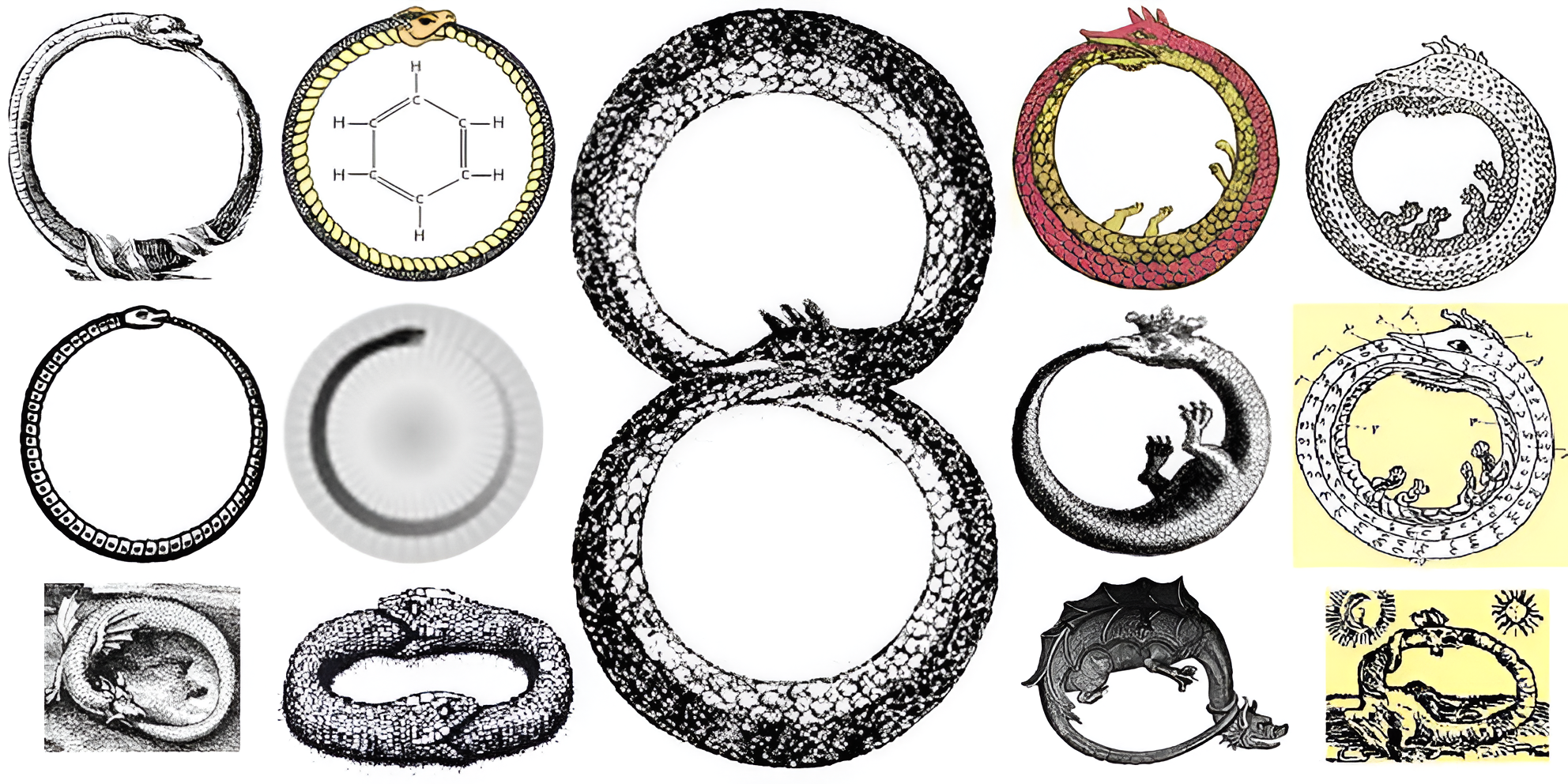
"the beginning and end are common on the circumference of a circle." — Heraclitus, c. 500 BCE
Inertia
Nobody warns you that identity is mostly tactical survival. You find the version of yourself that gets the least pushback, the one that makes the room comfortable, and you repeat it until the reflex starts to look like a personality. Then someone asks who you are. You open your mouth. Out comes a catalog of preferences. Music. Aesthetics. What you consume. As if consumption could ever add up to a soul.
We treat adolescence like a chrysalis, a clean transformation, blurred in, sharp out. Some of us just stay in the cocoon. Turning and turning. Arriving nowhere. Until the spinning is the whole point.
Somewhere in that stalled becoming, a quiet distaste sets in. Not for anything specific. Just the texture of your days. You can't explain it without sounding ungrateful, because the facts of your life are fine. You know your privilege. You know most of the world would trade tragedies with you in a heartbeat. Knowing that doesn't dissolve the grayness. It just stacks guilt on top of it.
You love to write. You've held onto it like proof of an inner life. But every time you sit down, the output is the same: circular, inward, the same four feelings on a broken carousel. You start to wonder if you're a writer, or just someone who mistook self-absorption for depth. The line is thin, embarrassingly thin. Real writers look outward eventually, toward the world, toward other people. You keep waiting for your gaze to turn. It doesn't. Every sentence walks you back into the same small room.
Some people are entirely readable. They move through the world generating meaning without trying. Strangers look at them and find a narrative worth following. It isn't envy, not exactly. It's the recognition that some selves are simply easier to romanticize, and romanticizing your life is the only thing standing between living it and just enduring it. Strip the gloss and you're a casualty of circumstance.
You can't locate what makes a life cohere. Not beauty. Not luck. Some people arrive already in focus. Others spend a lifetime as a blur that won't resolve, no matter how long you look at it.
People would be surprised. That's the one consistent truth. You're not who anyone thinks to worry about. You show up. You stay present. You say the right things in the right order. You're even funny. The public version of you is warm, easy to be around. It's just that the house has another room, and no one's ever taken there.
The quiet wish to exit has been around long enough that it doesn't frighten you anymore. That's the most honest way to put it. Not violent, not urgent. An unlocked door at the end of the hall. You don't need to turn the handle. You just need to know it's there, that some final shred of agency is still yours. Even on the good days. The beautiful afternoons don't touch it. You've stopped waiting for a version of yourself without this in it. It's just architecture now.
You keep circling one variable, the thing that, changed, might have reset the whole trajectory. You can't name it, but you know its shape by the absence it leaves. You think about the version of you who got the small mercy, a different year, a different person saying the right thing at the right time. Not envy. More a flat, clinical curiosity, like watching a film about someone else's life and realizing that's what it was supposed to look like.
You told yourself you were strong, once. When the hard things landed, you decided they wouldn't touch you. They didn't. Or you froze the nerve endings, which felt the same as strength at the time. You built a whole identity on being the one who doesn't break. The one who handles it. The one who's always fine.
Then the fallout. Self-loathing that doesn't even bother attaching itself to a real trauma. No wound to press on. Just a general uselessness, a flat stretch of land where feeling used to be. Sadness would at least be something to work with. This is worse: no investment left in the person you're supposed to become.
You go looking for a desire that doesn't need an audience, something you'd build even with no one watching. The search is almost clinical. You empty your interests onto the table like objects from a coat pocket: writing, reading, small private rituals. Even these have been warped by other people's eyes. Praise. Comparison. The quiet, ugly competition over who's more perceptive, more articulate, more interestingly damaged.
Maybe the truth is you're in love with being a shell. Not the ache of the emptiness, the utility of it. The void is a familiar weight; losing it means losing the only recognizable thing you have left. A hollow is a cleaner story than wanting and failing. A better tragedy than trying hard and landing ordinary. A shell has a silhouette, at least. Something you can hand someone and they'll understand it without you saying a word.
Because wanting, real wanting, is embarrassing. It's exposed. It means believing you deserve the thing before you have any proof you do.
Deaths of Me
When does a person truly die?
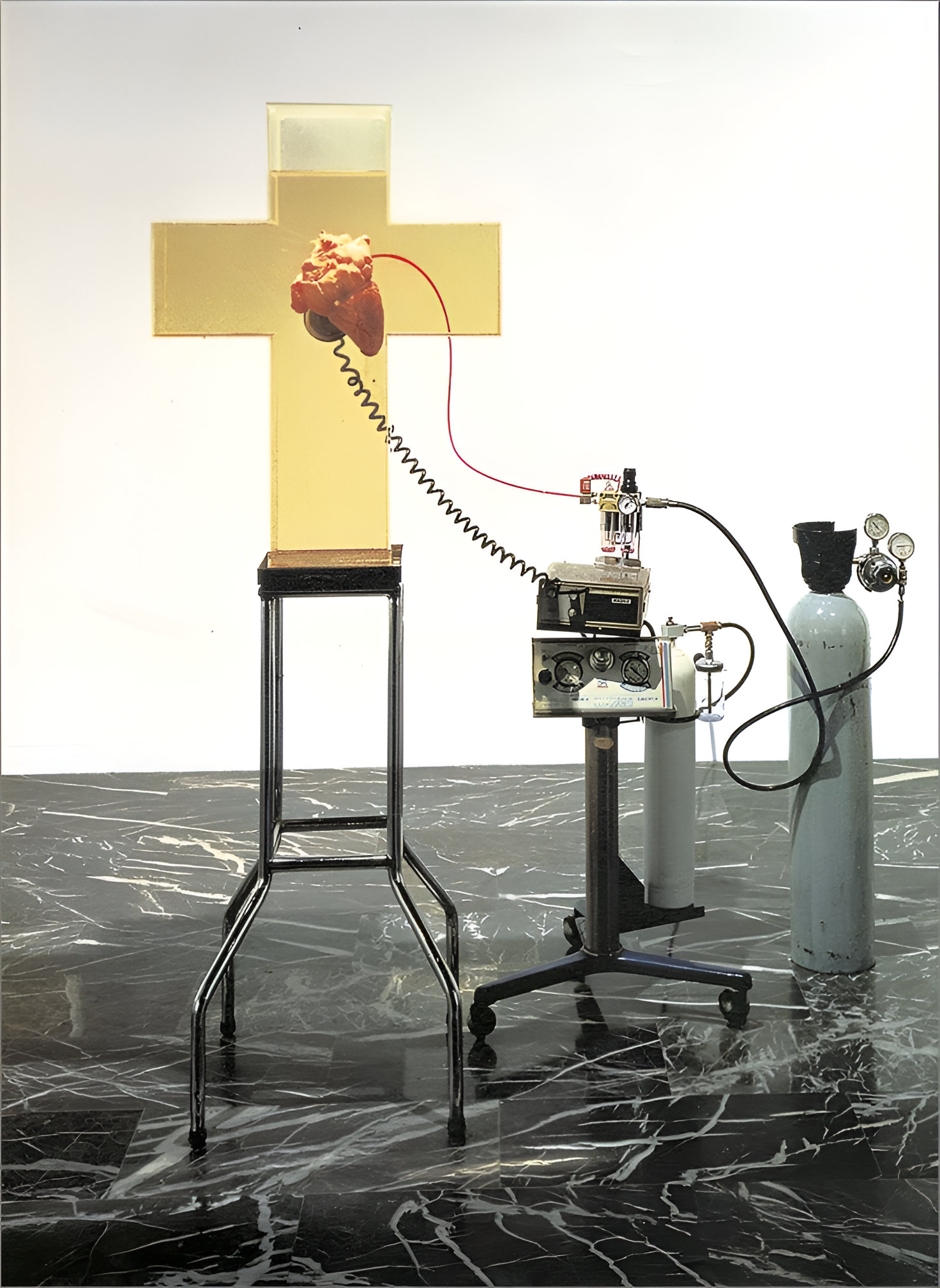
Not when the heart stops. Not when the muscles go still. A life ends long before the body does. We die in increments. In pauses. In all the small surrenders we make just to keep existing.
You live a life that becomes a narrative for everyone else. A daughter. A partner. One day, a memory. You carry the names like garments stitched to your skin. You grow around them, or you shrink beneath them. At the end, in the quiet of a final room, someone holds your hand and tells you that you were good. Kind. Deeply loved.
You are left to wonder what they are actually mourning. You? Or what you were to them?
They will remember pieces. A favorite memory. A specific smile. The version of you that was easiest to hold. They will never know the full weight of your existence, the aching corners, the invisible victories, the small desires that never found enough air to live outside your own mind. All of it buried. All of it unsaid. That is the first death.
There are others.
The death that comes when you stop being a daughter, because the love changed. Or cooled. Or turned.
The death of being a partner in name only, a role, a checklist, a familiar presence to be tolerated.
The death of being unseen, not by the world, but by your own eyes. The moment you go from person to placeholder. You wake up and realize you are surviving out of habit, hauling your body through the day like something already half gone.
People leave. Even the ones who swore they were anchors. A father, a mother, a friend, love was never a guarantee of permanence. You can hand over everything you have, your tenderness, your truth, your irreplaceable time, and still be left on the road. That is a death too.
Maybe the cruelest part of the design is how we keep moving anyway. Dying in pieces, still walking. Eyes open. Heart guarded. Smile practiced. A corpse in motion.
Somewhere in all that surviving, we forget the one debt we owed our own skin: to live. Not for an audience. Not for the roles. For ourselves. To want cleanly. To feel sharply. To take up the exact amount of space we're given and breathe into it.
When the end comes, there is no grand accounting. No scales. No welcoming light. No sudden clarity. We stop. The idea of an afterlife is beautiful. Reunion, peace, the promise of it, comforting. But beautiful has never meant true.
The day your mother dies might be twenty years off, once time and old bitterness have made strangers of you both. Or it could be tonight, her skin still warm, the love still an open wound. Either way, it will be the last time you look at her.
Death is the mother of beauty. But truth is her equal. So when do we start living, before the quiet takes the rest of us?